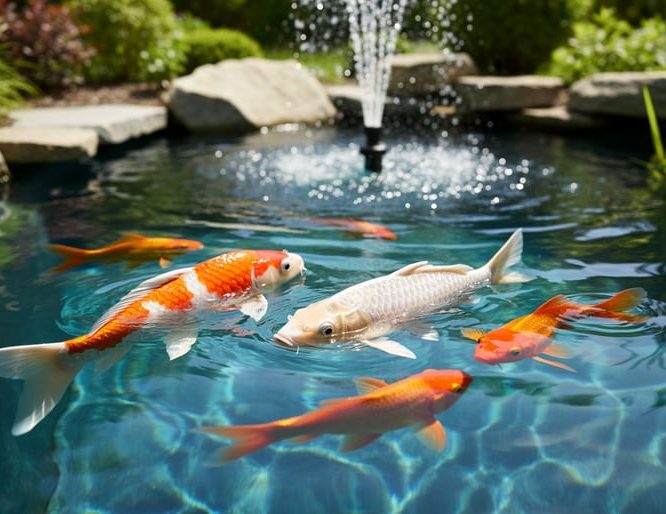
Caring for Japanese koi and goldfish in your backyard pond comes down to five core practices: maintaining stable water quality, providing proper filtration, feeding seasonally appropriate amounts, monitoring for disease, and protecting fish from predators. Most pond owners can keep these stunning fish thriving year-round with about 15 minutes of daily observation and 1-2 hours of weekly maintenance once the system is properly established.
These graceful swimmers bring movement, color, and life to any water feature, but they’re not a set-it-and-forget-it addition. Koi can live 25-50 years and grow over two feet long, while goldfish often reach 10-12 inches in a well-maintained pond environment. Both species evolved from carp native to East Asia and share similar care requirements, though koi demand more space and better filtration due to their larger size and higher waste production.
The difference between a pond where fish merely survive and one where they flourish lies in understanding how these living jewels interact with their environment. Water temperature affects their metabolism and feeding schedule. Ammonia and nitrite levels spike when biological filtration fails. Oxygen drops during hot summer nights. Each variable connects to the others, creating a delicate balance that you’ll learn to read and adjust.
transform your pond from a simple water hole into a thriving ecosystem takes knowledge and consistency, but the reward is watching fish glide through crystal-clear water, rising eagerly when you approach, their scales catching sunlight like living gemstones. This guide walks you through everything you need to create that success, from essential equipment to daily care routines that become second nature within your first season.
Understanding Japanese Pond Fish: Koi and Goldfish Basics
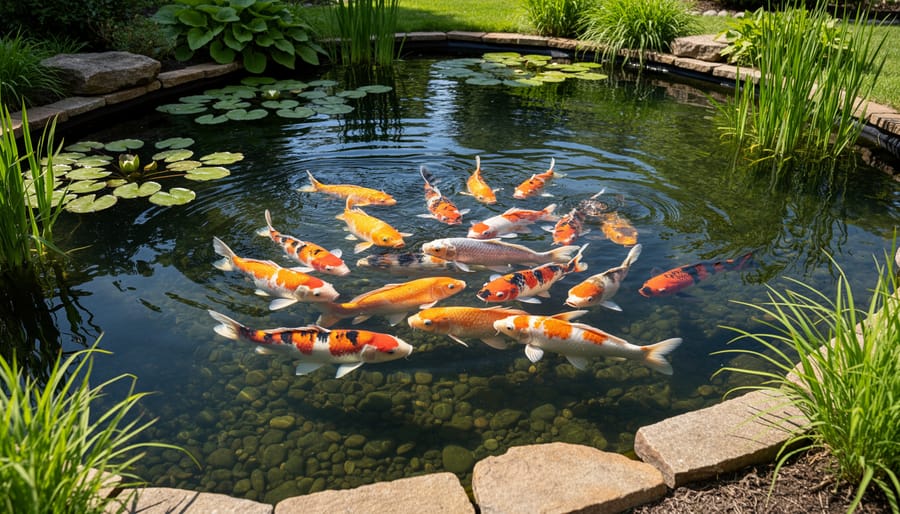
Japanese koi and goldfish have earned their place as the stars of backyard ponds for good reason. Both species originated in East Asia, koi were selectively bred from common carp in Japan over 200 years ago for their stunning colors and patterns, while goldfish were domesticated in China more than a thousand years ago. These fish bring vibrant splashes of orange, red, white, black, and yellow to your water feature, creating living art that changes as they glide through the pond.
What sets these fish apart is their remarkable hardiness. Unlike tropical fish that demand precise temperatures and complex care, koi and goldfish tolerate a wide range of conditions. They adapt to seasonal changes, surviving cold winters by entering a dormant state and thriving in summer warmth. This resilience makes them forgiving companions for beginners while still rewarding experienced pond keepers with their beauty and personality.
The Koi lifespan of 25 to 50 years (with some living beyond 100 in exceptional cases) means you’re gaining long-term companions, not short-lived pets. Goldfish typically live 10 to 20 years in ponds, far longer than their bowl-dwelling counterparts. Both species are social creatures that recognize their keepers, often swimming to the surface at feeding time and displaying distinct personalities.
Their popularity comes down to a simple truth: they transform a pond from a static water feature into a dynamic ecosystem. They’re active enough to draw the eye but peaceful enough to create the tranquil atmosphere most pond owners seek. Whether you need to fix your water feature or start fresh, these fish adapt to established ponds and new builds alike, making them the reliable foundation for any backyard aquatic display.
What You’ll Need for Proper Japanese Fish Care
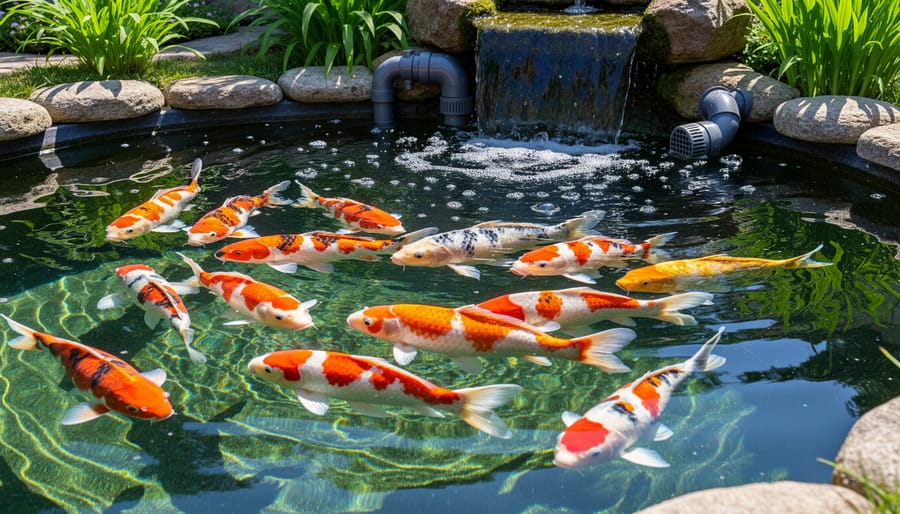
Before you can enjoy watching your koi and goldfish thrive, you need to gather the right equipment. Think of these items as your fish care toolkit, each one plays a specific role in keeping your pond ecosystem balanced and your fish healthy.
Essential Equipment for Healthy Fish
Every pond owner needs these basics to maintain proper water conditions and care for their fish:
– Water testing kit: Measures pH, ammonia, nitrite, and nitrate levels to catch problems before they harm your fish
– Filtration system: Removes waste and debris while supporting beneficial bacteria that convert harmful ammonia
– Aerator or air pump: Adds oxygen to the water, which Japanese fish need especially during warm summer months
– Quality fish food: Provides balanced nutrition formulated specifically for koi and goldfish
– Fish net: Allows you to safely catch and move fish when needed for health checks or pond maintenance
– Floating thermometer: Tracks water temperature to adjust feeding and identify seasonal changes
– Dechlorinator: Neutralizes harmful chlorine and chloramines in tap water during water changes
– Beneficial bacteria supplement: Helps establish and maintain the nitrogen cycle that processes fish waste
Your filtration system deserves special attention because it’s the workhorse of your pond. For Japanese fish, you’ll want a filter rated for at least twice your pond’s volume since koi and goldfish produce considerable waste. Mechanical filtration traps solid debris, while biological filtration hosts the bacteria that break down toxic ammonia into safer compounds.
An aerator becomes critical during summer when warm water holds less oxygen. You’ll notice your fish gasping at the surface if oxygen drops too low, so an air pump with air stones or a fountain feature keeps water moving and oxygenated.
Helpful Optional Items
While not strictly necessary, a UV clarifier controls green water by killing suspended algae as water passes through. A quarantine tank (even a large plastic tub works) lets you isolate new fish for two weeks before adding them to your pond, preventing disease introduction. A pond vacuum makes spring and fall cleanings much easier by sucking up settled debris from the bottom.
Start with the essentials, and you’ll have everything needed to maintain healthy water and happy fish.
Safety Warnings and Common Mistakes to Avoid
Even experienced pond owners make mistakes that can harm their fish or create unnecessary work. Understanding these pitfalls before they happen protects your investment and keeps your koi and goldfish healthy.
Feed only what your fish can consume in five minutes, and remember that fish don’t need as much food as you might think. In cooler water below 60°F, their metabolism slows dramatically, so reduce feeding frequency or stop altogether when temperatures drop. Many pond owners kill their fish with kindness by tossing in food multiple times daily.
Overcrowding creates a cascade of problems. A common rule is one inch of fish per 10 gallons of water, but koi can grow to two feet or longer. That cute six-inch koi you bought will need substantial space within a few years. Too many fish means your filtration system can’t keep up with waste production, leading to toxic ammonia and nitrite spikes.
Never add new fish directly to your pond without quarantining them first. Even healthy-looking fish from reputable dealers can carry parasites or diseases that will spread to your entire population. Keep new arrivals in a separate tank for at least two weeks while you observe them closely.
Sudden temperature changes shock fish and can be fatal. When introducing new fish, float the bag in your pond for 20 minutes to equalize temperature, then gradually add pond water to the bag before releasing them. Similarly, never dump ice-cold water directly into your pond during water changes on hot days.
Chemical misuse kills fish quickly. Never use garden pesticides, herbicides, or fertilizers near your pond, runoff will contaminate the water. If you must treat sick fish, follow medication instructions precisely and remove activated carbon from your filter first, as it neutralizes most treatments. When in doubt, consult with an experienced pond professional rather than experimenting with your fish’s lives.
Predators like herons, raccoons, and cats view your pond as an all-you-can-eat buffet. Provide hiding spots with plants or pond shelters, and consider netting or motion-activated deterrents if predation becomes a problem.
Step-by-Step: Daily and Weekly Fish Care Routine
Daily Care Tasks
Start each morning with a visual sweep of your pond before breakfast. Look for any fish floating at odd angles, gasping at the surface, or hiding when they’d normally be active. Healthy koi and goldfish should swim smoothly and show interest when you approach. Count your fish, a missing fish often signals a predator problem or a health issue you’ve overlooked.
Feed once in the morning during warmer months, giving only what your fish can consume in three to five minutes. Toss small amounts, watch them eat, and stop when their feeding slows. Overfeeding clouds the water and spikes ammonia levels fast. In cooler weather below 60°F, feed every other day or skip altogether when temperatures drop further.
While fish eat, scan the water surface for debris, leaves, pollen, dead insects, and skim it off with a net. Check that your pump is running smoothly without strange noises, and verify water is flowing through your filter and fountain features. These koi care tips take five minutes but catch problems before they escalate.
In the evening, do a second headcount and watch feeding behavior if you’re doing twice-daily meals during peak summer heat. Notice any changes in color, torn fins, or white spots that weren’t there this morning. Early detection makes the difference between a quick fix and a major health crisis.
Weekly Maintenance
Every week, dedicate time to three essential tasks that keep your pond water safe for koi and goldfish: testing, changing, and cleaning.
Start with water testing using a liquid test kit (far more accurate than strips). Test pH first, it should stay between 7.0 and 8.5 for healthy fish. Next, check ammonia and nitrite levels, which must read zero in an established pond. Any detectable amount signals a problem with your biological filtration. Finally, test nitrate, keeping it below 40 ppm through regular water changes.
Once you’ve recorded your results, perform a partial water change of 10-20% of the pond’s total volume. Use a siphon or pump to remove water from the bottom, where debris accumulates. This simple habit removes dissolved waste products that tests can’t always measure and replenishes essential minerals. If you’re using city water, treat it with a dechlorinator before adding it to the pond. Pour the new water gently to avoid temperature shock, a five-degree difference or less is safe.
While the water level is low, use a net to skim any floating debris like leaves or uneaten food. Wipe down the inside rim of the pond where algae tends to build up, and check your skimmer basket, emptying it if needed.
These three steps, test, change, clean, take about 30 minutes and prevent most water quality problems before they affect your fish.
Monthly and Seasonal Care
Filter maintenance is crucial monthly work. Turn off your pump before cleaning filter media, never clean all media at once, only rinse half in pond water (not tap water) to preserve beneficial bacteria. Check pump intake screens for debris and ensure water flow remains strong.
Monthly inspections catch problems early. Net each fish gently to examine for parasites, red streaks, torn fins, or unusual growths. Look closely at their bodies under good light. This hands-on check reveals issues that distant observation misses.
Seasonal shifts demand different care. As water cools below 60°F in fall, reduce feeding and switch to wheat-germ based foods your fish digest easier. Once temperatures drop below 50°F, stop feeding entirely, their metabolism slows too much to process food. Spring warming reverses this process gradually.
Feeding Your Japanese Pond Fish Correctly
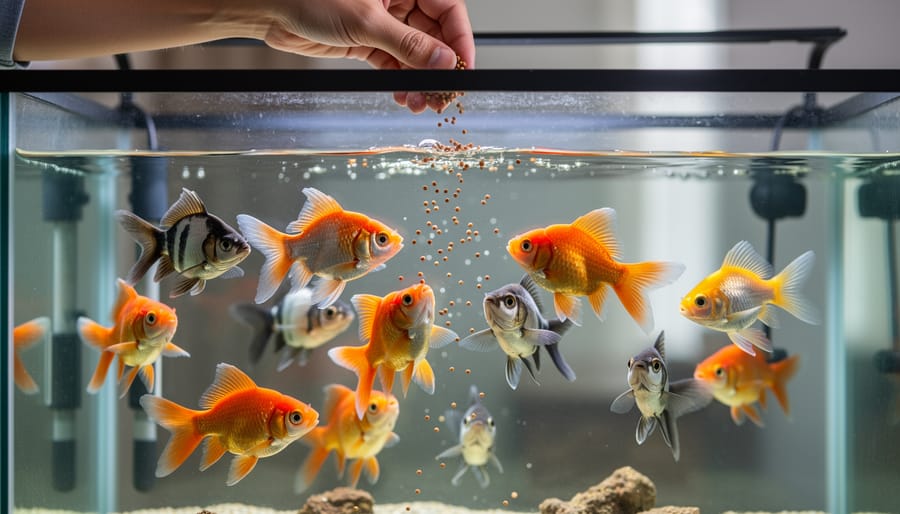
Feeding your koi and goldfish properly makes the difference between fish that merely survive and fish that truly thrive. These fish are omnivores with simple digestive systems, so what you feed them and when directly impacts their health, color vibrancy, and growth.
Quality fish food should list whole protein sources like fish meal or shrimp meal as the first ingredient. For koi and goldfish, look for pellets with 30-36% protein during the active growing season (spring through early fall) and lower protein content around 20-25% for cooler months. Avoid bargain foods filled with wheat or corn as primary ingredients, they provide little nutrition and cloud your water with excess waste.
Pellet size matters. Choose floating pellets sized appropriately for your fish: small pellets (3-4mm) for goldfish and young koi, medium (5-6mm) for adult koi. Floating food lets you monitor how much they’re actually eating and removes uneaten portions easily.
During warm months when water temperature sits between 65-85°F, feed your fish two to three times daily. Offer only what they’ll consume in five minutes. A good rule of thumb: feed an amount roughly equal to the size of their eye per fish, per feeding. You’ll quickly learn your pond’s rhythm, active fish darting to the surface signal healthy appetites.
Here’s where seasonal adjustment becomes critical. As water temperature drops below 60°F in fall, reduce feeding frequency to once daily, then switch to wheat germ-based food that’s easier to digest in cold water. Between 50-60°F, feed every other day. Once temperatures drop below 50°F, stop feeding entirely until spring, their metabolism slows so much they can’t digest food, and uneaten pellets will foul your water.
When spring arrives and temperatures climb back above 50°F, resume with small amounts of wheat germ food every few days, gradually increasing frequency and switching back to higher-protein pellets as water warms past 60°F.
Overfeeding kills more fish than underfeeding ever will. If you’re unsure, feed less. Your fish will scavenge algae and insects naturally, and they’re perfectly capable of going days without your help.
Maintaining Optimal Water Quality for Japanese Fish
Water quality determines whether your koi and goldfish merely survive or truly thrive. The difference between crystal-clear water with vibrant, active fish and murky water with sluggish, stressed fish comes down to understanding and managing five critical parameters.
The Nitrogen Cycle: Your Pond’s Life Support System
Every time your fish eat, they produce waste. That waste breaks down into ammonia, which is toxic to fish even at low concentrations. Beneficial bacteria in your filter and pond convert ammonia into nitrite (also toxic), then into nitrate (much less harmful). This natural process, called the nitrogen cycle, runs constantly in established ponds. New ponds take four to six weeks to develop enough beneficial bacteria to handle fish waste, which is why starting slowly with just a few fish matters so much.
Critical Water Parameters and Target Ranges
Your test kit measures the health of this biological system. Aim for pH between 7.0 and 8.5 (koi and goldfish tolerate a range, but stability matters more than the exact number). Ammonia and nitrite should always read zero in an established pond. Nitrate can safely reach 40-80 ppm before requiring action. Water temperature affects everything: fish metabolism, beneficial bacteria activity, and oxygen levels all change as temperature shifts.
How Filtration Supports Water Quality
Your filter does two jobs. Mechanical filtration removes visible debris before it decays. Biological filtration provides surface area where beneficial bacteria colonize and process fish waste. Without adequate biological filtration, ammonia and nitrite spike, causing burns on fish gills and skin. Running your pump continuously ensures these bacteria receive the constant oxygen flow they need to function.
Why Water Changes Are Non-Negotiable
Even with perfect filtration, nitrate accumulates and trace minerals deplete. Weekly water changes of 10-20% dilute nitrate, replenish minerals, and remove dissolved organic compounds that test kits don’t measure. This simple habit is fundamental to healthy fish care because it addresses problems before they become visible.
When water quality deteriorates, fish show it immediately through gasping at the surface, clamped fins, loss of appetite, and faded colors. Maintaining stable parameters through regular testing, proper filtration, and consistent water changes prevents these issues and gives your Japanese pond fish the foundation they need for long, vibrant lives.
Recognizing and Responding to Fish Health Issues
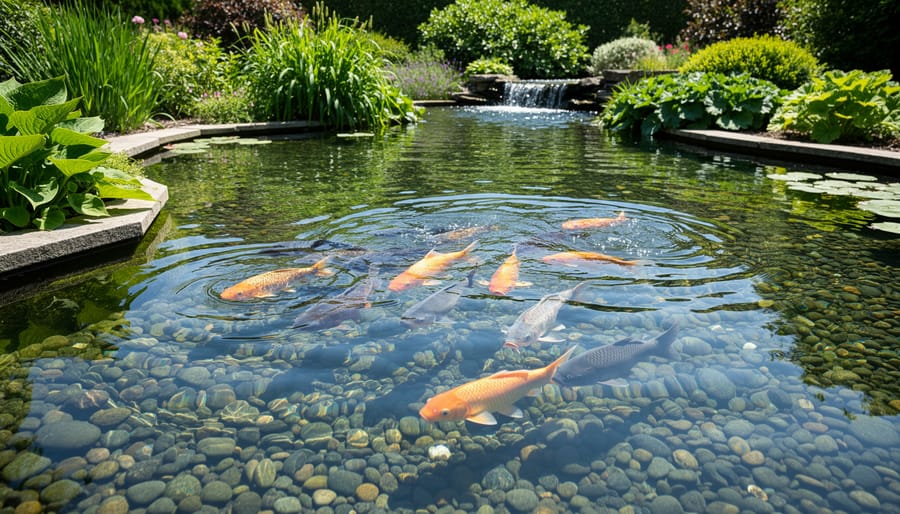
Healthy koi and goldfish are active, alert, and eager to eat, with vibrant colors, smooth scales, and fins held fully extended. They swim gracefully throughout the pond, interact socially with other fish, and respond quickly when you approach at feeding time. When these behaviors change, it’s your first signal that something might be wrong.
Watch for these warning signs that indicate stress or illness:
- Lethargy or spending long periods motionless at the pond bottom
- Loss of appetite or refusing food for more than two days
- Clamped fins held tight against the body instead of extended
- Gasping at the surface or hanging near waterfalls and aeration points
- Unusual swimming patterns like darting, flashing against surfaces, or listing to one side
- White spots, cotton-like growth, red streaks, or open lesions on the body
- Cloudy, bulging, or sunken eyes
- Isolation from other fish or hiding behavior
When you spot concerning symptoms, test your water immediately, poor water quality causes most fish health problems. High ammonia or nitrite levels, wrong pH, or low oxygen can trigger all the symptoms above. If your parameters are off, perform a 25-30% water change right away and increase aeration.
For visible parasites like white spots (ich) or flukes causing flashing behavior, isolate affected fish if possible and treat with appropriate pond-safe medication following package directions carefully. Never medicate your entire pond unless absolutely necessary, as treatments can harm beneficial bacteria in your filtration system.
Bacterial infections showing as red streaks, ulcers, or fuzzy patches require antibiotic treatment, but diagnosing the specific infection accurately matters. Minor issues often resolve with improved water quality and salt baths (1-3 pounds per 100 gallons), but persistent or worsening symptoms need expert attention. If fish don’t improve within 48 hours of water changes and basic treatment, or if multiple fish show severe symptoms, contact professional pond services for proper diagnosis and treatment before the problem spreads through your entire pond population.
How to Verify Your Fish Are Thriving
Healthy Japanese koi and goldfish show their well-being in ways you can see every single day. Watch for active, smooth swimming patterns throughout the pond, thriving fish explore all levels of the water, not just the surface or bottom. They should approach eagerly at feeding time, competing gently for food without lethargic hesitation or frantic aggression.
Color vibrancy tells you a lot. Well-cared-for koi display deep, rich pigmentation in their patterns, while goldfish maintain bright oranges, reds, or calicos. Faded colors or darkening patches often signal stress or poor water quality. Fins should be fully extended and undamaged, not clamped against the body.
Growth is another reliable indicator, especially in younger fish. Koi and goldfish should show steady, gradual size increases throughout their active growing season. Measure water parameters weekly, you want consistent pH between 7.0 and 8.5, zero ammonia and nitrite, and low nitrates below 40 ppm.
Clear water matters too, though not just for aesthetics. You should be able to see your fish clearly at the pond’s deepest point. Cloudy or green water suggests filtration problems or an algae bloom that affects oxygen levels. Watch how your fish interact with each other. Healthy koi and goldfish are social but calm, swimming together without excessive chasing, gasping at the surface, or isolating themselves in corners. These combined signals confirm your care routine is working.
Frequently Asked Questions About Japanese Pond Fish Care
How many fish can I keep in my pond?
A safe rule of thumb is one inch of adult fish per 10 gallons of water, but that’s conservative, many successful ponds thrive with slightly higher densities if filtration and aeration are robust. Remember that koi can grow to 24-36 inches, so plan for their adult size, not the 4-inch juveniles you bring home. Overcrowding stresses fish, taxes your filtration system, and leads to poor water quality, so it’s always better to start with fewer fish than your pond can theoretically handle.
Can koi and goldfish live together in the same pond?
Yes, they’re excellent pond mates. Both species are peaceful, share similar water quality needs, and tolerate the same temperature ranges. Goldfish typically stay smaller, so ensure koi don’t outcompete them during feeding, scatter food across different areas or feed smaller portions more frequently so everyone gets their share.
How do I care for my fish during winter?
Stop feeding when water temperatures drop below 50°F, as fish metabolism slows dramatically and they can’t digest food properly. Keep a hole in the ice with a pond heater or aerator to allow gas exchange, never break ice by force, as the shockwaves stress fish.
How long do koi and goldfish live?
Goldfish commonly live 10-20 years in well-maintained ponds, while koi often reach 25-35 years, with some exceptional individuals living 50+ years. Proper water quality, nutrition, and space are the biggest factors in longevity.
When should I call a professional for help?
Contact a pond specialist if you’re experiencing repeated fish deaths, persistent water quality problems despite regular maintenance, or widespread illness you can’t identify. Professionals can diagnose complex issues, recommend system upgrades, and provide treatments that aren’t available at retail stores.
Will my fish breed, and what should I do with baby fish?
Both koi and goldfish spawn readily in spring when water warms to 65-70°F. You’ll notice males chasing females and eggs scattered on plants or along the pond edges. Most eggs and fry become food for adult fish or predators, which naturally controls population, if you want to raise babies, you’ll need a separate tank with fine filtration and specialized fry food. Don’t feel obligated to save every fry; a few survivors each year is normal and healthy for the pond ecosystem.
Caring for Japanese koi and goldfish in your backyard pond transforms a simple water feature into a living, breathing ecosystem that rewards you daily. When you establish a consistent care routine, testing water weekly, feeding properly, and watching for signs of health, you’re not just maintaining fish. You’re creating a peaceful retreat where vibrant colors flash beneath the surface and gentle splashes greet you each morning.
The beauty of fish care is that it quickly becomes second nature. What might seem like a lot of steps initially soon flows into an enjoyable rhythm. Those few minutes spent observing your fish each day become a meditation, a moment to disconnect from everything else. You’ll notice how your koi swim up to greet you, how their colors deepen with proper nutrition, how the pond transforms with the seasons.
Your Japanese pond fish will thrive for decades with the right attention, growing more stunning each year. That’s the real payoff: a tranquil space that brings joy to your family and guests while connecting you to the natural world right in your own backyard.
Of course, if you ever need help maintaining your pond or troubleshooting a fish health issue, professional support makes all the difference. At Skippy’s Stuff, we’ve been caring for ponds and their fish for over 25 years, and we’re always here to help you keep your aquatic haven thriving.