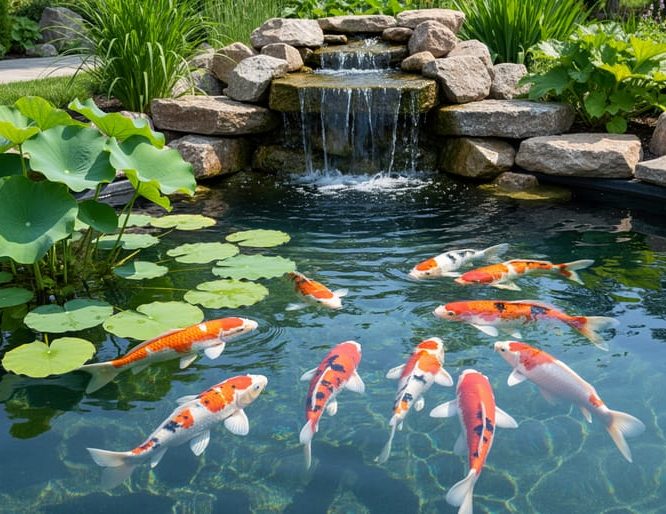
Professional pond care services handle everything from seasonal water testing and filtration maintenance to algae control and fish health monitoring, typically through monthly or quarterly visits that keep your aquatic ecosystem balanced year-round. Most pond owners hire professionals either because they lack the time for weekly maintenance tasks or because diagnosing water quality issues requires specialized knowledge and equipment.
Think of pond care like maintaining a living, breathing system. Your pond isn’t just water and rocks; it’s home to beneficial bacteria, fish, plants, and microscopic organisms that all need to stay in harmony. When that balance tips, you might see cloudy water, string algae taking over, or fish gasping at the surface. Professional pond care services bring both the diagnostic tools and the experience to spot problems before they become crises.
The real value shows up in the seasonal transitions. Spring startups after winter dormancy, summer heat that accelerates algae growth, fall cleanouts before leaves pile up, and winterizing before the first freeze all demand different approaches and timing. A professional service follows a systematic calendar, testing water chemistry, cleaning mechanical filters, trimming overgrown plants, and adjusting feeding schedules as temperatures shift. They also catch the subtle signs that something’s wrong, like a slight ammonia spike or a pump losing efficiency, long before these issues harm your fish or require expensive emergency fixes.
Understanding Your Pond’s Fish Care Needs
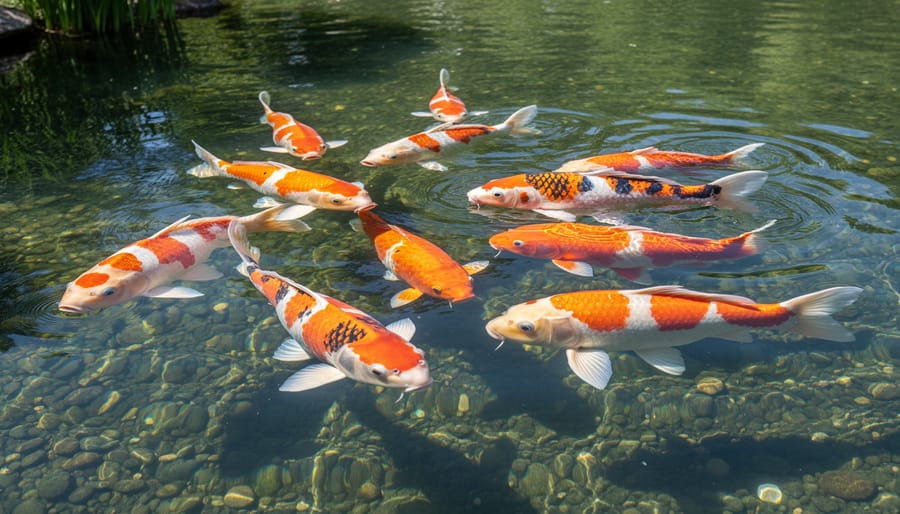
Your pond isn’t an aquarium with a glass lid and a thermostat. It’s an open ecosystem where temperature swings with the seasons, rain dilutes or floods the water, and oxygen levels shift with algae blooms and summer heat. Fish in ponds face challenges that goldfish in a tank never encounter, which is why pond care demands a different approach entirely.
Water quality in a pond changes constantly. A heavy rainstorm can drop pH overnight. Decomposing leaves dump organic matter that spikes ammonia. Unlike a controlled aquarium where you adjust parameters incrementally, pond conditions can shift drastically in 48 hours, and your fish can’t adapt that quickly. Their gills evolved for stable environments, not the roller coaster of an outdoor water feature.
Seasonal changes add another layer of complexity. In spring, as water warms past 50°F, your fish wake from semi-dormancy with weakened immune systems, vulnerable to parasites and bacterial infections. Summer heat drops oxygen levels while ramping up fish metabolism, creating a dangerous mismatch. Fall demands a careful feeding reduction so fish don’t enter winter with undigested food rotting in their gut. Winter requires maintaining an oxygen exchange point through ice. Each season presents distinct threats that require specific interventions, and timing matters enormously. Following solid koi care tips means understanding these cycles rather than applying the same routine year-round.
The pond ecosystem itself complicates fish care. You’re not just managing fish; you’re balancing bacteria colonies, algae, plants, predators, and temperature-driven chemical reactions. When one element falters, fish health follows. That interconnectedness is what makes professional pond care valuable: recognizing how water chemistry, seasonal timing, and biological balance work together to either support or stress your fish.
Essential Tools and Materials for Pond Fish Care
Proper pond fish care depends on having the right tools at hand. Whether you’re maintaining your pond yourself or working with professionals, understanding the essential equipment helps you make informed decisions about what you truly need versus what’s nice to have.
Water Quality Testing and Monitoring
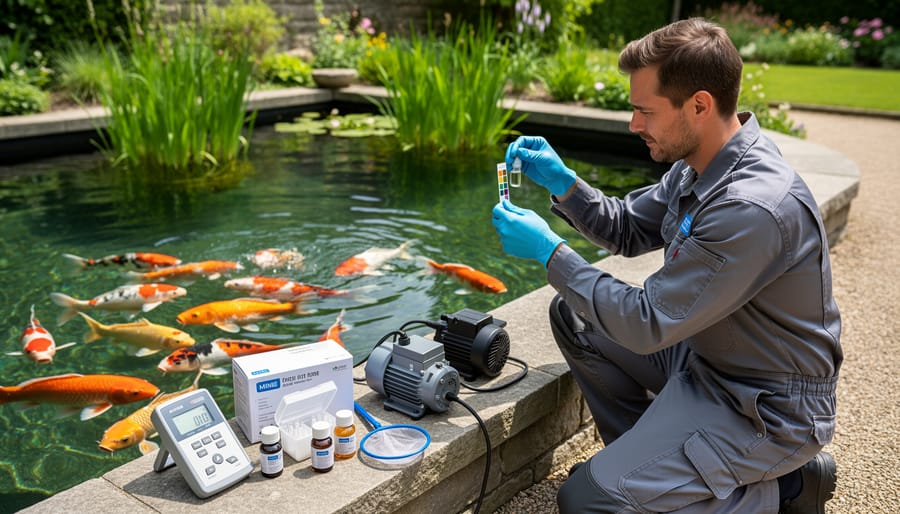
The foundation of fish health starts with knowing your water conditions. A reliable test kit measures pH, ammonia, nitrite, and nitrate levels, the critical indicators that tell you if your pond environment supports thriving fish. Professional services typically use commercial-grade digital meters for instant readings, but homeowners can achieve excellent results with quality liquid test kits that cost a fraction of the price. You’ll want to test weekly during active seasons and monthly in winter when fish are dormant.
Essential Equipment Breakdown
Your pond care toolkit should include items matched to your pond’s size and fish population:
- Water testing kit or meter for pH, ammonia, nitrite, and nitrate monitoring
- Pond net with extendable handle for debris removal and gentle fish handling
- Aeration system (air pump, diffuser stones, or fountain) to maintain oxygen levels
- Quality filtration system appropriate for your pond volume and fish load
- Water conditioner to neutralize chlorine and chloramine in tap water
- Thermometer to track temperature changes that affect fish metabolism
- Bucket designated exclusively for pond use to prevent contamination
- Seasonal supplies including de-icer for winter and shade netting for summer
Professional pond care services bring specialized equipment you likely won’t need to purchase yourself, commercial vacuum systems for deep cleaning, professional-grade medications, and transport containers for fish relocation during major maintenance. They’ve also invested in backup systems and replacement parts that ensure your pond never goes without critical filtration or aeration.
The real difference isn’t just the tools but knowing when and how to use them. A $30 test kit provides the same data as a $300 meter if you follow the instructions correctly. What professionals bring is the experience to interpret those numbers and respond appropriately before small issues become fish health emergencies.
Safety Considerations for Pond Fish Care
Pond care involves more than routine maintenance, it requires awareness of hazards that can harm both your fish and yourself. Professionals follow strict safety protocols to protect everyone involved, and understanding these measures helps you recognize quality service and avoid costly mistakes.
Chemical Safety and Water Treatment
Water treatments and pond chemicals demand precise dosing and careful handling. Always read product labels thoroughly before application, wear protective gloves when handling concentrated solutions, and store chemicals away from sunlight and moisture. Professional services use calibrated dosing equipment to ensure accuracy, eyeballing measurements can result in dangerous imbalances. Never mix different products unless explicitly directed, as chemical reactions can create toxic compounds.
Fish Handling Best Practices
Minimize direct contact with fish whenever possible. Their protective slime coat shields them from infection, and rough handling strips this barrier. When you must handle fish, wet your hands first and support their body fully, never squeeze or grip around the gills. Experienced pond technicians use soft mesh nets and move fish quickly between environments to reduce stress. If you’re transferring fish during cleaning or treatment, match water temperature closely to prevent thermal shock.
Electrical and Structural Safety
Water and electricity create serious risks around ponds. All electrical equipment should have ground fault circuit interrupter (GFCI) protection, and you should inspect cords regularly for damage. Keep connections elevated above water level and protected from weather exposure. Before performing any maintenance that requires reaching into the pond, disconnect pumps and other electrical devices. Professional services also watch for unstable pond edges or slippery surfaces that pose fall hazards during routine care visits.
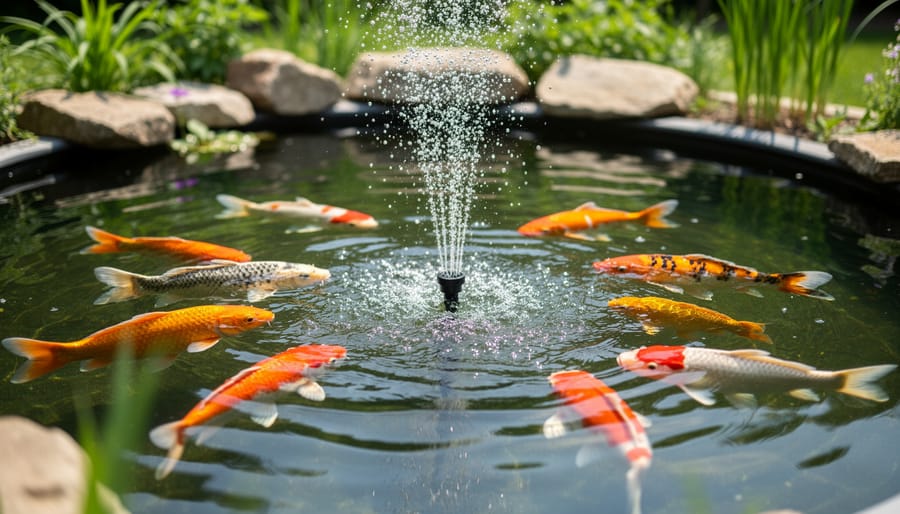
Step-by-Step Professional Pond Care Process
Spring Startup and Fish Awakening
Spring arrives like a gentle alarm clock for your pond, and how you wake up your fish can make or break their health for the entire season. When water temperatures climb to around 50°F, your fish start stirring from their winter sleep, but their bodies aren’t ready for business as usual yet.
Professional pond care services time this transition carefully. We don’t just toss food in and call it done. Your fish’s digestive systems have been dormant for months, and their immune systems are at their weakest point right after winter. Starting with wheat germ-based foods that digest easily at cooler temperatures makes all the difference. Following proper feeding guidance prevents digestive problems that could compromise your fish before summer even starts.
Spring cleaning happens in stages, not all at once. We’ll remove accumulated debris, but we’re careful not to strip away all the beneficial bacteria your pond needs. Testing water quality comes first, checking ammonia, nitrite, and pH levels tells us exactly what your pond needs. If readings are off, we address them before the fish become fully active.
The goal isn’t just getting through spring. It’s setting up your fish for a healthy, vibrant year ahead.
Summer Maintenance and Peak Fish Activity
Summer brings the most rewarding time for pond owners, your fish are vibrant, active, and eager to interact. But this peak activity also demands the most vigilant summer pond care to keep your aquatic friends healthy. Professional services focus on three critical areas during these warmer months.
Water temperature rises, which means your fish’s metabolism kicks into high gear. They’ll eat more, produce more waste, and consume more oxygen. The challenge? Warmer water holds less dissolved oxygen than cool water, creating a dangerous combination. That’s why low dissolved oxygen harms fish especially during hot afternoons and overnight hours. Pros monitor oxygen levels closely and often run aeration systems 24/7 in summer.
Feeding schedules change too. While spring might mean feeding once daily, summer often calls for two or three smaller feedings as fish can process food quickly. High-quality protein supports their active lifestyle without overloading your biofilter.
Algae blooms become the summer nemesis. Excess nutrients from fish waste combined with long sunny days create perfect conditions for rapid algae growth. The best approach is to control algae by reducing nutrients through proper filtration and feeding practices, rather than constantly battling blooms with chemicals.
Fall Preparation for Winter
As temperatures drop and leaves begin to fall, your pond fish need careful preparation to survive the coming winter. This transition period is critical, rushing or skipping steps can leave fish vulnerable when cold weather arrives.
Start reducing feeding as water temperatures consistently fall below 60°F. Fish metabolism slows dramatically in cooler water, and they can’t digest food properly when it’s cold. Switch to wheat-germ-based food that’s easier to digest in lower temperatures. By the time water hits 50°F, stop feeding entirely. Your fish will live off stored body fat through winter, so don’t worry, they’re designed for this.
Clean your pond thoroughly before winter sets in. Remove fallen leaves, decaying plant matter, and debris from the bottom. This organic material breaks down over winter, consuming oxygen your fish desperately need. A thorough winter preparation cleaning now prevents toxic gas buildup under ice.
Check your pond’s depth. Fish need at least 18-24 inches of water that won’t freeze solid. If your pond is shallow, you might need to move fish indoors for winter or install a de-icer and aerator to maintain an opening in the ice for gas exchange. Don’t let ice seal your pond completely, trapped gases can suffocate fish even in cold water.
Winter Fish Care and Monitoring
Winter transforms your pond into a quiet sanctuary where fish enter a state of torpor, their metabolism slowing to a crawl as water temperatures drop below 50°F. Professional pond care services understand that this dormant period, while less visually active, requires vigilant attention to ensure your fish emerge healthy in spring.
The primary winter concern is maintaining adequate oxygen levels beneath ice cover. Even dormant fish need oxygen, and decomposing organic matter consumes it rapidly. Professional services typically install de-icers or aerators to keep a portion of the surface ice-free, allowing essential gas exchange. They position these devices strategically, never directly over where fish rest, as the current disrupts their low-energy state.
Monitoring during winter means checking weekly for ice thickness and ensuring circulation devices remain operational. A hole in the ice serves as your pond’s breathing apparatus. Professionals also watch for unusual fish behavior; while fish should rest near the bottom, excessive surface activity or gasping indicates oxygen deprivation requiring immediate intervention.
Water quality testing continues monthly during winter, though adjustments happen less frequently. Ammonia can still accumulate from fish waste, even with reduced metabolism. Professional services balance the need for monitoring against minimizing disturbance, understanding that each pond visit should serve a clear purpose rather than disrupting the winter equilibrium your fish depend on for survival.
Verifying Your Fish Are Healthy and Thriving
Knowing whether your fish are healthy doesn’t require a degree in aquatic biology. Watch your fish during feeding time: healthy pond fish respond eagerly to food, swimming actively to the surface with strong, coordinated movements. Sluggish fish that hide during feeding or swim erratically often signal problems before water tests do.
Physical appearance tells you volumes. Healthy fish display vibrant colors, full fins without tears or fraying, and clear eyes. Their scales lie flat against their bodies, and you shouldn’t see any white spots, fuzzy patches, or red streaks. Professional pond care services check these healthy koi indicators during every visit, comparing observations over time to catch subtle changes.
Key signs that confirm your pond care routine is working include:
- Fish swimming throughout all pond levels, not just hiding at the bottom
- Consistent eagerness at feeding times with no uneaten food after five minutes
- Bright, clear eyes and smooth scales without discoloration or damage
- Ammonia and nitrite levels consistently at zero, nitrate below 40 ppm
- Dissolved oxygen above 6 mg/L and stable pH between 7.0 and 8.5
Behavioral patterns matter as much as water chemistry. Healthy fish establish territories, interact with each other normally, and maintain regular swimming rhythms. Fish gasping at the surface except during hot afternoons indicates oxygen problems. Those rubbing against pond sides likely have parasites, even if water tests look perfect.
We recommend homeowners monitor pond water quality weekly during summer and biweekly in spring and fall. Professional services use calibrated electronic meters for accuracy, but quality test strips work fine for routine checks. The combination of visual observation and consistent water testing creates a complete picture of whether your fish truly thrive or just survive.
When to Call Professional Pond Care Services
Knowing when to bring in professional help can save your fish, and save you considerable stress. If you’re dealing with recurring algae blooms despite your best efforts, or if your water clarity never seems right no matter what products you add, that’s a signal your pond’s ecosystem needs expert diagnosis. Professionals can identify underlying issues like inadequate filtration, poor circulation patterns, or nutrient imbalances that aren’t obvious to the untrained eye.
Fish health emergencies demand immediate professional attention. If you notice multiple fish gasping at the surface, unexplained deaths, or unusual lesions and discoloration, don’t wait. These symptoms often indicate serious water quality problems or disease outbreaks that require rapid, knowledgeable intervention.
Seasonal transitions are perfect times for professional services even when nothing seems wrong. Spring startup is particularly valuable, experts can assess winter damage, restart your system properly, and catch developing problems before they threaten your fish. Fall winterization ensures your fish enter dormancy in optimal condition.
Consider your own capacity honestly. If maintaining your pond feels overwhelming, if you travel frequently, or if you simply want more time to enjoy your water feature instead of maintaining it, regular professional care makes sense. Preventive maintenance visits typically cost far less than emergency repairs or replacing lost fish.
At Skippy’s Stuff, we’ve seen homeowners successfully manage basic care while relying on us for seasonal deep maintenance, system upgrades, and troubleshooting. There’s no shame in asking for help, that’s what 25 years of experience is for.
Common Questions About Pond Fish Care Services
Homeowners considering professional pond care services typically want to know what they’re getting into before making the call. Here are the questions we hear most often at Skippy’s Stuff, along with straightforward answers based on our 25+ years of experience.
How often do ponds need professional service?
Most ponds benefit from quarterly visits aligned with seasonal changes, though specific needs vary based on pond size, fish population, and local climate. Some homeowners opt for spring startup and fall preparation services only, handling summer maintenance themselves.
What’s typically included in a pond care service visit?
Standard visits include water quality testing, equipment inspection and cleaning, fish health assessment, and seasonal adjustments to filtration or aeration systems. Many services also include debris removal and plant management as needed.
Can I schedule one-time services, or do I need an ongoing contract?
Most reputable pond care companies offer both options. One-time spring cleanings or emergency visits are common, though seasonal contracts often provide better value and continuity of care.
How much do professional pond care services cost?
Pricing varies widely based on pond size, service frequency, and regional rates, but expect anywhere from $150 to $400 per visit for routine maintenance. Complex issues or larger ponds naturally cost more.
Will service visits stress my fish?
Professional technicians work carefully to minimize disruption, often completing most maintenance without handling fish at all. Any necessary fish interaction follows proper techniques to reduce stress.
What happens if problems are found during a visit?
Reputable services will explain issues clearly, provide treatment options with transparent pricing, and never perform unexpected work without your approval. Emergency situations that threaten fish health are the rare exception.
The best way to get specific answers for your situation is to request a consultation. Most pond care companies offer free initial assessments where they can evaluate your pond, discuss your concerns, and provide a customized service recommendation. This no-pressure visit lets you see whether the company’s approach and expertise match your needs before committing to any service.
verification
Watch your fish closely during feeding time, healthy pond fish should show eager interest and swim actively toward food. Their colors should be vibrant, not faded or patchy, and their fins should remain upright and undamaged. Look for smooth, coordinated swimming patterns rather than erratic movements, floating at the surface, or sitting on the bottom for extended periods.
Test your water weekly during active seasons. Ammonia and nitrite levels must stay at zero, while nitrate should remain below 40 ppm. pH should hold steady between 7.0 and 8.5, with less than 0.3-point fluctuations between tests. Temperature swings larger than five degrees in a single day signal problems with pond depth or circulation.
Check your pond’s clarity by placing your hand six inches below the surface. You should see it clearly. Persistent cloudiness or green water indicates filtration issues that will eventually stress your fish.
Count your fish regularly. If you suddenly can’t locate one or two, investigate immediately. Missing fish often mean predator problems, disease, or water quality issues that haven’t shown up in your tests yet.
Maintaining healthy fish in your pond doesn’t have to be overwhelming. Whether you choose professional services or take the DIY route with expert guidance, what matters most is consistency and understanding your pond’s unique needs. Healthy fish create that peaceful, thriving ecosystem you envisioned when you first dreamed of adding a water feature to your property.
At Skippy’s Stuff, we’ve spent over 25 years helping homeowners in the Chicago area discover the joy of well-maintained ponds. We’ve seen countless ponds transform from struggling systems into vibrant, balanced environments where fish thrive year after year. That transformation happens through knowledge, attention to detail, and genuine care for aquatic life.
You’ve now got the roadmap for keeping your fish healthy through every season. You understand the tools, the timing, and the signs that tell you when things are going right or when it’s time to call for help. Whether you’re ready to tackle pond care yourself or prefer partnering with experienced professionals, you’re equipped to make the right choice for your situation.
Your fish depend on you, and there’s something deeply satisfying about watching them flourish in a pond that’s been properly cared for.