
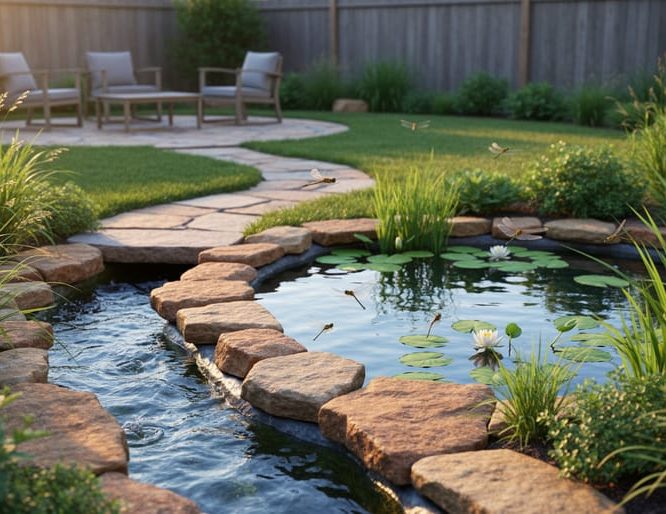
Picture a backyard where the gentle sound of trickling water replaces the hum of traffic, where dragonflies dance above lily pads, and where neighbors stop mid-walk just to admire what you’ve created. That’s the power of a thoughtfully integrated water feature—but only when it’s done right.
Too many homeowners install a pond or fountain as an afterthought, dropping it into a corner of the yard like a decorative accessory. The result? A feature that feels disconnected, looks out of place, and becomes more of a maintenance headache than the peaceful retreat they imagined. The difference between a water feature that transforms your space and one that falls flat comes down to integration.
When you transform your pond or water feature from a standalone element into a natural part of your landscape, something magical happens. It becomes the heart of your outdoor space, drawing the eye naturally and creating that coveted sense of tranquility you’ve been dreaming about.
The secret isn’t in choosing the most expensive materials or the largest installation. It’s about understanding how water features work with your existing landscape—how they interact with plants, pathways, and sight lines. It’s knowing which common mistakes will have you regretting your investment and which simple techniques will make your feature look like it’s always belonged there.
Whether you’re planning your first water feature or wondering why your current one doesn’t quite feel right, proper integration makes all the difference.
The Difference Between a Water Feature and an Integrated Water Feature
Picture a beautiful ceramic fountain sitting on a patio—lovely on its own, but somewhat disconnected from the surrounding landscape. Now imagine a meandering stream that flows naturally between native grasses, curves around existing trees, and pools into a pond edged with locally-sourced stone. That’s the difference between placing a water feature and truly integrating one into your landscape.
A standalone water feature is essentially an outdoor decoration. You buy it, position it somewhere in the yard, plug it in, and call it done. There’s nothing inherently wrong with this approach, but it often feels like an afterthought rather than part of a cohesive design.
An integrated water feature, on the other hand, becomes part of your property’s story. It considers everything already happening in your landscape—the slope of your land, the plants that thrive there, your existing walkways and patios, even how water naturally wants to flow across your property. Integration means your water feature looks like it belongs, as if nature intended it to be there all along.
I remember working with a couple who had purchased a gorgeous pre-formed pond kit. They dropped it in their backyard, surrounded it with a ring of river rock, and wondered why it looked so artificial. During their pond transformation, we repositioned the pond to nestle into a natural low spot, worked it around their mature oak tree, and used varying stone sizes that matched their existing garden beds. We added native aquatic plants that complemented their perennial border. Suddenly, the pond didn’t look like something they’d bought—it looked like something that had always been part of their landscape.
True integration requires stepping back and seeing your entire property as a connected ecosystem. It’s about understanding how each element relates to the others and creating harmony rather than simply adding features.
Planning Your Landscape Around Water
Working With Your Property’s Natural Features
Before you start sketching designs or shopping for pumps, take a walk around your property with fresh eyes. The best water features feel like they’ve always belonged there because they work with what nature already provided.
Start by observing how water naturally moves across your yard after a rainfall. Those low spots where puddles form? They’re telling you something important about your property’s drainage patterns. Rather than fighting against these natural flows, you can transform them into beautiful features. We’ve helped countless homeowners turn problematic soggy areas into stunning pond ecosystems that actually solve drainage issues while adding beauty.
Look at your existing slopes and grades too. A gentle hillside becomes the perfect opportunity for a cascading waterfall or stream. The elevation changes you might consider challenges are actually gifts—gravity does the heavy lifting, creating natural water movement that’s both energy-efficient and visually appealing.
Take note of existing landscape elements as well. That cluster of mature trees? Their shade creates an ideal microclimate for a serene woodland pond. The natural rock outcropping in your backyard? It’s ready-made hardscaping that can anchor your water feature with authentic character.
Working with these natural features rather than against them saves you money, reduces maintenance headaches, and creates designs that look established from day one. Your property is already telling you where it wants water to be—you just need to listen and respond thoughtfully.
Choosing the Right Location
Finding the perfect spot for your water feature can make the difference between a stunning focal point and a landscaping afterthought. Think of it like placing a piece of art in your home—you want it where it can be appreciated and enjoyed.
Start by considering visibility. Where do you spend most of your time outdoors? Can you see the water feature from your favorite window inside? The gentle sound of trickling water loses its magic if you never get to experience it. Walk through your yard at different times of day, imagining where a pond or fountain would bring you the most joy.
Sunlight plays a crucial role too. Most aquatic plants thrive with four to six hours of sunlight daily, but too much direct sun can promote algae growth and overheat the water. A location with morning sun and afternoon shade often hits that sweet spot. We’ve seen countless homeowners who initially wanted their pond in full sun, only to struggle with maintenance later.
Don’t forget the practical details. You’ll need access to electricity for pumps and filters, plus a water source for filling and topping off. Avoid placing water features directly under trees—fallen leaves create extra maintenance headaches and can clog your system. Similarly, steer clear of low-lying areas where runoff collects, as lawn chemicals and debris will flow straight into your pristine water.
Finally, consider how the feature integrates with your existing landscape flow. Natural gathering spots near patios or seating areas work beautifully, creating that peaceful retreat atmosphere everyone craves.
Sizing Your Water Feature to Match Your Space
Getting the size right is one of the most crucial decisions you’ll make when adding a water feature to your landscape. Think of it like choosing furniture for a room—you wouldn’t squeeze an oversized sectional into a tiny apartment, nor would you place a small accent chair alone in a grand ballroom.
For smaller yards, a compact bubbling fountain or a charming wall-mounted feature can create that peaceful ambiance without dominating your space. These gentle additions provide the soothing sounds of water while leaving room for plantings and seating areas. In medium-sized gardens, consider a modest pond or a tiered fountain that serves as a focal point without overwhelming the surroundings.
Larger properties offer exciting opportunities for statement pieces like expansive koi ponds or multi-level waterfalls. However, even with ample space, proportions matter. A tiny fountain lost in acres of lawn won’t deliver the visual or auditory impact you’re hoping for.
A helpful rule of thumb: your water feature should occupy roughly five to ten percent of your visible landscape area. Walk your property at different times of day and from various angles. Where do your eyes naturally land? That’s often your ideal location, and it will help guide the appropriate size for maximum enjoyment.
Creating Seamless Transitions
Edging and Borders That Look Natural
One of the most telltale signs of an artificial-looking water feature is what we call the “necklace effect”—a perfectly uniform ring of same-sized stones placed around the perimeter. Nature doesn’t work that way, and your pond shouldn’t either.
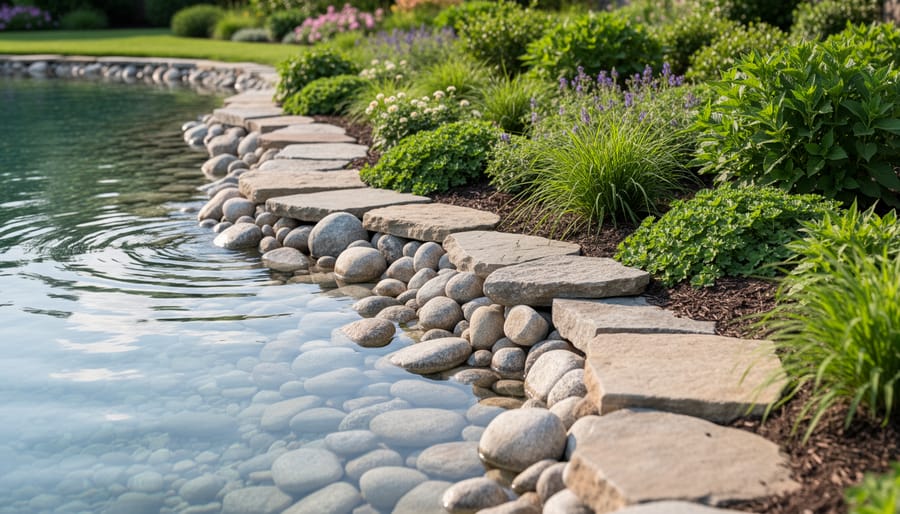
Think about natural waterways you’ve admired. The stones vary dramatically in size, shape, and placement. Some boulders sit partially submerged, while smaller rocks nestle between larger ones in seemingly random arrangements. This organic irregularity is what creates visual authenticity.
When selecting materials, choose natural stone over manufactured products whenever possible. River rock, fieldstone, and local limestone blend seamlessly with surrounding landscapes. Mix sizes generously—pair fist-sized stones with ones you can barely lift. Cluster three or four larger boulders as focal points, then fill gaps with progressively smaller stones.
Place rocks at varying depths and angles too. Some should lean inward toward the water, others outward into plantings. Avoid the temptation to create that neat, predictable border. If you’re redesigning your pond or starting fresh, step back frequently during placement. Your edging should look like it’s been there forever, not like it was installed last Tuesday. The goal is making people wonder whether you built around existing stones or somehow convinced them to stay put naturally.
Plant Selection for Water Feature Integration
The magic of a truly integrated water feature lies in how seamlessly it connects with the surrounding landscape, and plant selection plays a starring role in creating that natural flow. Think of your plantings as the conversation between water and land—they should tell a cohesive story.
Start with marginal plants that can handle wet feet and grow directly at the water’s edge. Irises, cattails, and pickerel rush create beautiful vertical accents while softening hard edges. These plants not only look stunning reflected in the water but also provide habitat for beneficial wildlife. For smaller features, try dwarf varieties that won’t overwhelm the space.
Just beyond the margins, moisture-loving perennials create that crucial transition zone. Astilbe, ligularia, and hostas thrive in the consistently damp soil near water features, bringing lush foliage and seasonal color. Cardinal flower and Japanese iris add vibrant blooms that draw the eye and create visual continuity.
The key is creating graduated moisture zones—wettest at the edge, gradually transitioning to normal garden conditions. This mimics how plants naturally arrange themselves around ponds and streams in the wild. We’ve seen countless features transformed from stark afterthoughts into cohesive garden focal points simply by thoughtful plant layering.
Consider bloom times too. Stagger flowering plants throughout the season so your water feature remains a dynamic focal point from spring through fall. Native species often perform best, requiring less maintenance while supporting local ecosystems—a win-win for both beauty and sustainability.
Blending Hardscape Elements
Think of hardscape elements as the bridge between your water feature and the rest of your outdoor living space. A beautifully designed patio positioned alongside a pond creates the perfect spot for morning coffee while you watch koi glide beneath lily pads. Natural stone pathways can wind around your water feature, inviting visitors to explore different viewpoints and appreciate the tranquil sounds from various angles.
The key is choosing materials that feel cohesive. If your water feature incorporates river rock and stacked stone, echo those textures in nearby seating walls or stepping stones. We’ve seen remarkable transformations when clients add a flagstone terrace that extends from their pondside, creating seamless transitions between wet and dry areas. Consider how people will interact with the space too. A bench tucked near a waterfall becomes an instant retreat, while a pergola overhead provides shade without blocking sightlines to the water. These thoughtful hardscape choices don’t just connect spaces, they enhance the entire experience, turning your water feature into a true centerpiece rather than an isolated element.
Different Water Features for Different Landscapes
Traditional Ponds and Their Landscape Partners
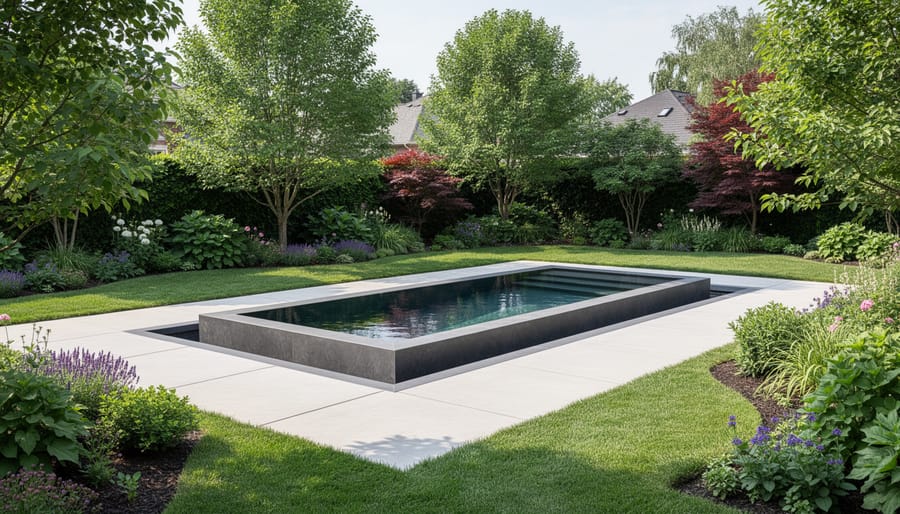
Traditional ponds offer remarkable versatility in landscape design, adapting beautifully to both formal and naturalistic settings. In formal gardens, ponds take on geometric shapes with clean edges, often complemented by stone coping and structured plantings that echo the home’s architecture. These refined features become elegant focal points that enhance symmetrical layouts and classical design elements.
Conversely, naturalistic ponds embrace organic, irregular shapes that mimic nature’s handiwork. Surrounded by native plants, river rocks, and gently sloping banks, they blend seamlessly into cottage gardens and woodland settings. The key lies in matching your pond’s style to your existing landscape rather than forcing a mismatched design. Whether you’re starting fresh or looking to transform existing ponds, consider your home’s character and the surrounding garden aesthetic. A well-integrated pond feels like it belongs, creating that sense of tranquility that draws people outdoors and makes your landscape truly memorable.
Waterfalls and Streams as Landscape Connectors
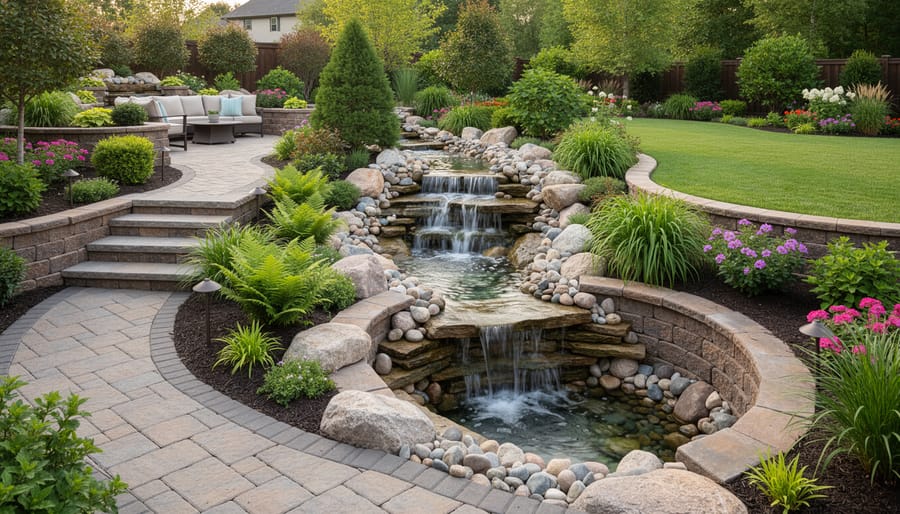
Moving water naturally draws the eye and creates pathways throughout your landscape, making waterfalls and streams perfect tools for connecting different outdoor spaces. Think of a stream as a winding ribbon that guides visitors from your patio to a hidden garden nook, or a cascading waterfall that anchors two distinct seating areas together. These features work beautifully when they feel like they belong in the terrain rather than sitting on top of it.
The key is making the water’s journey feel intentional. A meandering stream can soften the transition between formal and natural areas of your yard, while a series of small cascades can help manage elevation changes in a way that feels organic. We’ve found that homeowners love how these moving features create both visual interest and soothing sounds that carry throughout the property. The gentle babble of water becomes an invisible thread connecting your entire outdoor living space, making even large yards feel cohesive and intimate.
Pondless Water Features for Tight Integration
If you’re working with limited space or have concerns about safety, pondless water features might be the perfect solution for your landscape. These clever designs deliver all the beauty and tranquility of moving water without the standing pool that traditional ponds require.
The magic happens underground. Water circulates through a hidden reservoir buried beneath decorative rocks, creating the sights and sounds of a natural waterfall or stream while keeping the water completely out of sight when it’s not flowing. This means you get the peaceful ambiance without worrying about young children or curious pets around open water. It’s a game-changer for families who’ve always wanted a water feature but thought it wasn’t practical for their situation.
What makes pondless systems so versatile is how seamlessly they fit into existing landscapes. Because you’re not excavating for a large pond basin, installation is less invasive to your established gardens and hardscaping. You can tuck a pondless waterfall into a corner flowerbed, along a fence line, or even integrate it into a retaining wall. The smaller footprint means more flexibility in placement, and you’re not committed to dedicating a large section of your yard to water.
Maintenance is simpler too. Without a pond ecosystem to balance, there’s no fish care, fewer concerns about debris accumulation, and less water loss from evaporation. You still get that soothing sound of running water that transforms an ordinary backyard into a peaceful retreat, but with a fraction of the commitment. For many homeowners, especially those new to water features, pondless systems offer the ideal entry point into aquatic landscaping.
Bringing It All Together: A Real-World Example
When the Robertsons contacted us about their backyard, they were frustrated. They’d installed a small pond three years earlier—positioned awkwardly near the fence line, surrounded by struggling grass, and completely disconnected from their patio space. “It just sat there,” Mrs. Robertson told us. “We thought a water feature would bring peace to our yard, but honestly, we barely noticed it.”
The transformation began with listening. During our consultation, we learned the family spent most evenings on their deck, enjoying sunset views. Their pond was tucked in a corner they rarely visited. This pond renovation needed more than just a facelift—it needed complete reimagining.
We repositioned the water feature as a natural extension of their outdoor living space, creating a curved stream that originated near the deck and flowed into a larger pond visible from multiple vantage points. Native plants softened the edges, while strategically placed boulders created natural seating areas. Underwater lighting transformed evening gatherings into magical experiences.
The difference was remarkable. “Now the sound of water fills our patio,” Mr. Robertson shared six months later. “Our grandkids play along the stream, and we’ve spotted birds and butterflies we’d never seen before. It feels like the yard finally makes sense.”
This project perfectly illustrates what proper integration achieves. By considering how the family actually used their space and letting the water feature enhance rather than compete with their lifestyle, we created something that felt intentional and alive. The pond didn’t just exist in their landscape—it became the heart of it, bringing exactly the tranquility they’d originally hoped for.
Creating a water feature that truly belongs in your landscape isn’t just about dropping a pond or fountain into your yard and hoping for the best. As we’ve explored, it’s about weaving these elements into the very fabric of your outdoor space, where they feel as natural as the trees that shade your patio or the flowers that line your walkway.
The magic happens when technical know-how meets creative vision. Understanding water flow, filtration, and maintenance keeps your feature running beautifully for years to come. But it’s the artistic eye that transforms functional components into living art, creating those peaceful moments where you pause mid-step just to listen to the water and breathe a little deeper.
Whether you’re dreaming of a simple bubbling rock or an elaborate koi pond, the key is integration from the very beginning. Think about how water moves through your space, how it catches the light at different times of day, and how it connects different areas of your garden.
If you’re feeling inspired to bring this tranquility into your own backyard, you don’t have to go it alone. Working with experienced designers who understand both the science and soul of water features can make the difference between a water feature in your landscape and a water feature that transforms it. Take that first step and start envisioning what’s possible. Your personal oasis is closer than you think.