
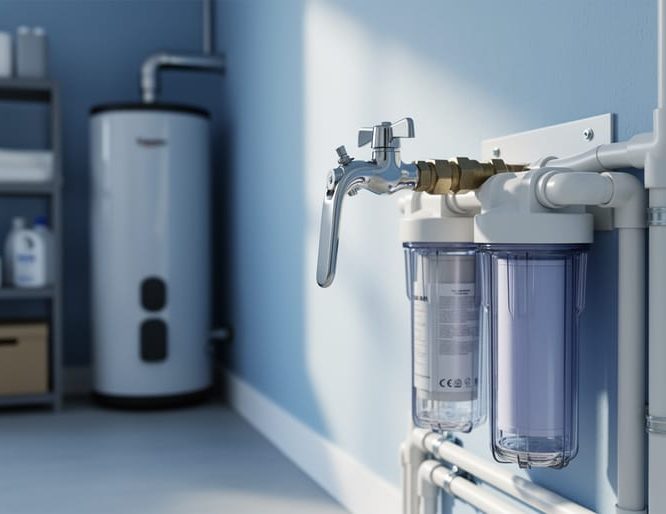
Your home’s water travels through miles of underground pipes before it reaches your tap, picking up sediment, chlorine, heavy metals, and other contaminants along the way. A whole house water filtration system tackles these issues at the point of entry, treating every drop that flows to your showers, appliances, and drinking taps. Installed near your main water shut-off valve, these systems typically range from $1,200 to $5,800 when professionally installed, depending on the filtration stages and capacity you need.
Think of it as giving your entire home the same water quality you’d expect from a premium bottled source. The difference shows up in subtler ways at first: cleaner dishes, softer laundry, better-tasting coffee. Over time, the benefits compound as your water heater, washing machine, and plumbing fixtures avoid the mineral buildup and corrosion that shortens their lifespan.
The challenge lies in matching the right system to your specific water problems. Municipal water with high chlorine levels requires different filtration than well water loaded with sediment and iron. That’s where certifications matter. NSF, the leader in water filtration certification, establishes drinking water standards and tests products to meet NSF/ANSI 42 for aesthetic concerns like taste and odor, and NSF/ANSI 53 for health-related contaminants like lead and cysts. Systems certified to these standards give you measurable assurance rather than marketing claims.
This guide walks you through the core filtration types, helps you identify which contaminants you’re actually dealing with, and shows you how to choose a system that protects your family without overspending on features you don’t need.
What Makes a Quality Whole House Water Filtration System
A quality whole house water filtration system does more than just clean your water, it becomes the first line of defense at the point where water enters your home, treating every drop before it reaches your faucets, showers, appliances, and outdoor spigots. Understanding the essential components helps you evaluate systems confidently and choose one that truly delivers.
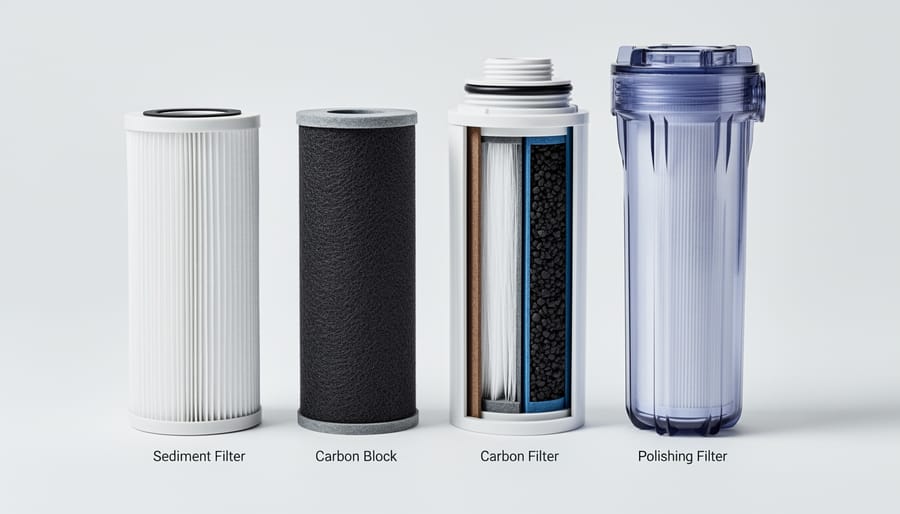
At its most basic, these systems consist of three core stages working in sequence. The sediment filter comes first, catching rust, sand, dirt, and other particles down to five microns or smaller. This stage protects your plumbing, extends the life of downstream filters, and prevents sediment from damaging water heaters and washing machines. Next, the carbon filter removes chlorine, volatile organic compounds, and chemicals that affect taste and smell. Activated carbon works through adsorption, contaminants stick to the surface as water passes through. Some systems add a third stage targeting specific concerns like heavy metals, bacteria, or chemical residues.
Certification separates marketing claims from proven performance. NSF, the leader in water filtration certification, establishes rigorous drinking water standards and tests products independently. When you see NSF/ANSI 42 certification, the system has been verified to reduce chlorine, taste, and odor. NSF/ANSI 53 certification goes further, confirming the removal of specific health contaminants like lead, mercury, asbestos, and certain parasites. NSF/ANSI 372 ensures all wetted components meet lead-free standards, so the filtration system itself doesn’t introduce contaminants.
Quality systems clearly display their NSF certifications and specify exactly which contaminants they’re certified to remove, not vague promises about “cleaner water.” This transparency matters because your home’s water has unique characteristics. A system certified to remove what’s actually in your water delivers real value, while one with impressive-sounding features you don’t need just costs more upfront and in ongoing maintenance. The right components, properly certified, give you clean water throughout your home without guesswork or regret.
Types of Whole House Filtration Systems Compared
Sediment and Carbon Systems
Sediment and carbon systems combine two filtration stages to tackle the most common complaints about municipal water: cloudiness, chlorine taste, and unpleasant odors. The sediment filter catches rust, silt, and particulates before they reach your faucets, while the carbon stage removes chlorine and organic compounds that affect taste and smell. These systems typically handle flow rates suitable for average households and are straightforward to maintain, most homeowners swap out filters every six to twelve months.
For city water that’s already treated but needs polishing, this setup strikes a practical balance between performance and cost. You get noticeably cleaner water throughout the house without the complexity or price tag of advanced filtration. If your water test shows sediment and chlorine as the main issues, a certified sediment-carbon system solves those problems reliably.
Multi-Stage and Specialty Systems
Multi-stage systems step beyond basic filtration when your water test reveals specific problems that sediment and carbon alone won’t solve. These advanced setups combine multiple filtration technologies, carbon blocks, catalytic media, and specialty cartridges, to target contaminants like lead, mercury, arsenic, or volatile organic compounds that slip through standard filters.
You’ll want a multi-stage system if testing shows heavy metals above safe levels, if you’re on well water with bacteria concerns, or if you live near agricultural areas where pesticides or herbicides might enter the water supply. These systems often include KDF media (a copper-zinc formulation) that removes chlorine, heavy metals, and inhibits bacterial growth, paired with activated alumina or bone char for fluoride and arsenic reduction.
The investment makes sense when you’re addressing a documented health risk, not just improving taste. Expect to pay toward the higher end of the $1,200 to $5,800 range for certified multi-stage systems, and verify they carry NSF/ANSI 53 certification for health-related contaminant reduction, not just the taste-and-odor standard of NSF/ANSI 42. If your test results show specific threats, a targeted multi-stage system delivers peace of mind that a basic filter can’t match.
Combination Systems
Combination systems pair filtration with water softening or UV sterilization, addressing multiple water issues in one integrated unit. If you’re dealing with both hard water and contaminant concerns, a filtration-softener combo eliminates the need for two separate systems and saves installation space. UV-filtration combinations are ideal for well water or areas where bacterial contamination is a risk, the filtration removes sediment and chemicals while UV light kills microorganisms.
The main benefit is convenience: one installation, one maintenance schedule, and streamlined performance. You’ll typically pay more upfront than a basic filtration system alone, but less than purchasing two separate units. The trade-off comes with complexity, if one component fails, the entire system may need servicing, and replacement parts can be more specialized. Flow rate matters even more with combination systems since water passes through multiple treatment stages, so make sure the unit can handle your household’s peak demand without pressure drops.
Key Factors to Consider Before You Buy
Before you invest in a whole house filtration system, you need to match the technology to your specific situation. The right choice depends on what’s actually in your water, how much water your household uses, and what you’re willing to spend upfront and over time. Skipping this homework leads to expensive mistakes, either buying more system than you need or worse, installing something that doesn’t address your actual water problems.
Start by testing your water. Don’t rely on guesswork or what you think might be wrong based on taste or smell. A comprehensive water test reveals exactly which contaminants you’re dealing with, chlorine, sediment, heavy metals, bacteria, or chemical compounds. This information determines whether you need basic carbon filtration or a more specialized multi-stage system. Municipal water customers can often request test results from their utility, but an independent lab test gives you the full picture, especially if you notice issues your neighbors don’t experience. Well water absolutely requires testing since you’re responsible for everything that comes out of your tap.
Flow rate requirements matter more than most homeowners realize. Your system needs to deliver enough gallons per minute to run multiple fixtures simultaneously without dropping pressure. A family of four typically needs at least 10 to 15 gallons per minute at peak usage, think morning showers running while the dishwasher fills and someone flushes a toilet. Undersizing your system creates frustrating pressure drops that defeat the purpose of whole house filtration.
Here’s what you should know before you start shopping:
– What contaminants showed up in your water test results, and at what levels
– Your household’s daily water usage and peak flow rate needs
– Available space near your main water shut-off valve for installation
– Your total budget, including the system and professional installation
– Whether you’re prepared to replace filters on schedule and maintain the system long-term
Budget realistically for both purchase and installation. In 2026, expect to pay roughly $1,200 to $5,800 installed for a quality whole house system with sediment and carbon filtration. Basic models start at the lower end, while comprehensive multi-stage systems with additional treatment capabilities land at the higher range. If you’re a lower-income household in British Columbia, check the Energy Savings Program rebates effective for invoices dated on or after July 6, 2026, these can offset part of your investment.
Installation location and plumbing access affect both cost and feasibility. You’ll need accessible space near your main water shut-off valve, clearance for filter changes, and possibly some plumbing modifications depending on your home’s configuration. Older homes with limited space or complicated plumbing layouts may face higher installation costs. Factor this into your planning early rather than discovering it after you’ve already purchased a system.
Installation Essentials Every Homeowner Should Know
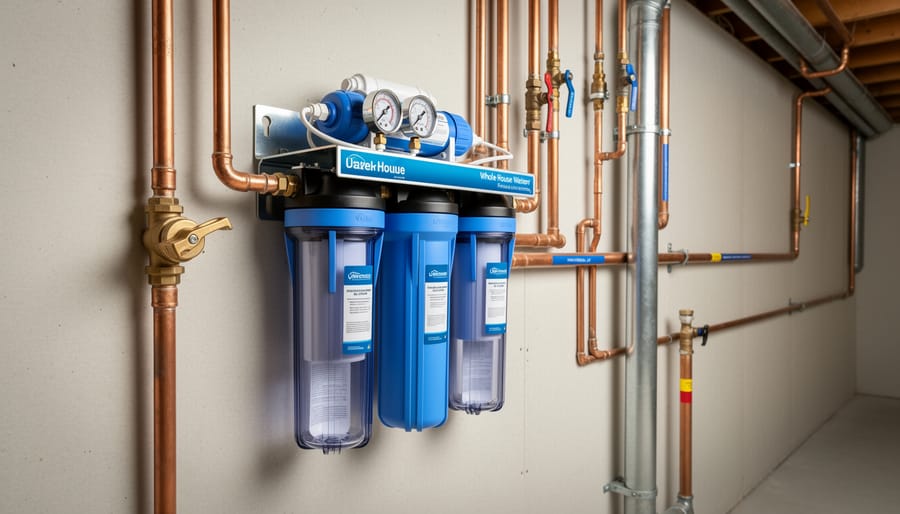
Installing a whole house water filtration system isn’t quite like assembling a backyard fountain, but the same principle applies: proper setup from the start prevents headaches down the road. You’ll need to address location, space, plumbing modifications, and whether your skills match the job.
Location and Access
The ideal spot is near your main water shut-off valve, typically where the municipal line enters your home or near your well pressure tank. This position lets the system treat all water before it reaches any fixture. You’ll need clearance around the unit for filter changes, most manufacturers recommend at least 18 inches on all sides. Understanding these water system basics helps you plan the installation properly from the beginning.
Check your ceiling height, too. Larger systems with multiple filter housings can stand four feet tall, and you’ll want headroom to lift filters out during maintenance.
Plumbing Modifications
You’re cutting into your main water line, which means shutting off water to the entire house and draining the system. The job requires soldering copper pipes or working with PEX fittings, installing bypass valves, and ensuring proper flow direction. Most systems come with installation kits that include necessary fittings, but you’ll need compatible pipe sizes, standard is 1-inch, though larger homes may run 1.25-inch lines.
DIY or Hire a Pro?
If you’re comfortable with basic plumbing and have the right tools, sediment-and-carbon systems are manageable weekend projects. Multi-stage systems, UV units, or installations requiring significant pipe rerouting? That’s professional territory. A licensed plumber costs $500 to $1,200 for installation, but you’ll avoid potential leaks, code violations, and warranty issues. Just like a well-built pond needs proper liner installation, your filtration system needs leak-free connections that’ll hold for years.
Which System Should You Choose? Our Recommendations
Your water test results should drive your decision more than any brand name or marketing claim. That said, most homeowners fall into one of a few common scenarios, and these recommendations give you a practical starting point.
If you’re on municipal water and mainly concerned about chlorine taste and odor, a basic sediment and carbon system handles the job efficiently. These typically run $1,200 to $2,000 installed and remove the chemical taste while protecting your appliances from sediment damage. Look for NSF/ANSI 42 certification at minimum, which confirms chlorine reduction performance.
Well water presents different challenges. Sediment is almost always an issue, and depending on your geology, you might deal with iron, sulfur, or bacterial contamination. A multi-stage system with sediment pre-filtration, carbon, and UV sterilization addresses these concerns comprehensively. Expect to invest $3,500 to $5,800 for a system that handles the full range of well water problems. The UV stage is worth the extra cost if your test shows any bacterial presence.
Here are our top recommendations matched to common situations:
- Best for municipal water: A sediment and carbon dual-stage system certified to NSF/ANSI 42 and 53, providing taste improvement and basic contaminant reduction for $1,200 to $2,000.
- Best for well water: A multi-stage system with sediment pre-filter, carbon filtration, and UV sterilization to address sediment, minerals, and potential bacteria, typically $3,500 to $5,800 installed.
- Best budget option: A basic sediment and single-carbon-stage system from a manufacturer with NSF certification, installed near your main shut-off valve for around $1,200 to $1,500.
- Best comprehensive protection: A system certified to NSF/ANSI 42, 53, and 372 with multiple filtration stages addressing a wide spectrum of contaminants, running $4,000 to $5,800 depending on capacity and features.
For B.C. homeowners qualifying as lower-income households, the Energy Savings Program offers rebates for invoices dated July 6, 2026 or later, which can offset a portion of your investment.
Match your system to what your water actually contains, not what you fear might be in it. A $5,000 system designed for heavy metal removal makes no sense if your test shows only chlorine and sediment.
Common Mistakes That Cost Homeowners Money
The biggest regrets we hear from homeowners always come back to the same few decisions, or non-decisions, made before installation. Testing your water first is non-negotiable. You can’t solve problems you haven’t identified, and buying a filtration system based on assumptions about what’s in your water is like diagnosing a pond issue without checking the chemistry. Professional water testing costs $50 to $300 depending on how comprehensive you go, but it’s the difference between spending $2,000 on the right system and $5,000 on the wrong one.
Another expensive misstep is undersizing the system for your household’s flow rate needs. A family of four typically needs 12 to 15 gallons per minute to avoid pressure drops when multiple fixtures run simultaneously. Choosing a system rated for a smaller home creates frustration and often forces a costly replacement within a year.
Ignoring ongoing maintenance costs also catches people off guard. Those replacement filters aren’t optional, they’re what keeps your water clean. Budget $150 to $600 annually depending on your system complexity and water quality. Stretching filters past their recommended lifespan doesn’t save money; it just gives you expensive equipment that no longer works properly.
Finally, we see homeowners choose uncertified systems to save a few hundred dollars upfront, only to wonder later if their water is actually being filtered effectively. NSF/ANSI certification isn’t marketing fluff, it’s independent verification that the system removes what it claims to remove. Installing an uncertified system is like filling a pond with untested water; you’re hoping for the best instead of knowing you’re getting quality results.
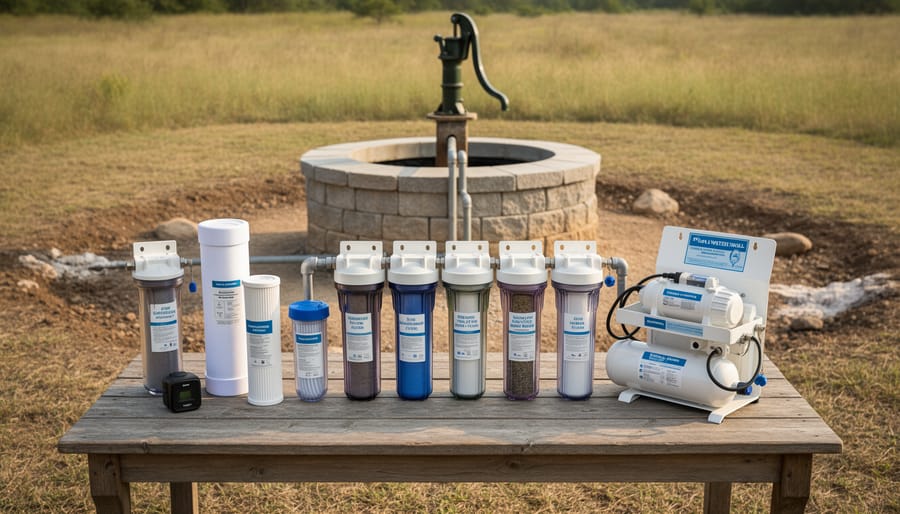
Maintenance and Long-Term Costs
Budgeting for a whole house water filtration system doesn’t stop at installation. The real commitment comes in keeping it running properly, and understanding these ongoing costs upfront helps you avoid surprises down the road.
Filter replacements are your biggest recurring expense. Sediment pre-filters typically need changing every three to six months, depending on your water quality and household usage. These run about $20 to $60 each. Carbon filters last longer, usually six to twelve months, and cost between $50 and $150 per replacement. If your system includes specialized filters for heavy metals or other contaminants, expect to pay $80 to $200 annually for those cartridges. Systems with multiple stages mean multiple replacement schedules to track.
Annual servicing is worth the investment. A professional checkup runs $100 to $200 and catches issues before they become expensive problems. During maintenance visits, technicians verify proper flow rates, check for leaks, sanitize housings, and confirm your system is removing contaminants as designed. Skip this step and you risk reduced performance or component failure.
Component lifespan varies by quality and water conditions. Well-built housings and valves can last 10 to 15 years with proper care. UV bulbs, if your system includes sterilization, need replacing every 12 months at $80 to $150 each. The control valves on advanced systems may need servicing or replacement after five to seven years.
Plan on spending $200 to $500 yearly for typical maintenance and replacements. Just as regular pond maintenance keeps your water feature thriving and beautiful, consistent filter care ensures your household water stays clean and safe. The upfront cost might seem significant, but spreading these expenses over a decade makes quality water throughout your home a manageable investment.
Frequently Asked Questions
You’ve invested time researching systems and comparing prices, now let’s tackle the questions that come up in every conversation about whole house filtration.
Do I really need a whole house system if I have city water?
City water meets safety standards, but many homeowners still taste chlorine, notice sediment, or want protection from aging pipes between the treatment plant and their home. A whole house system addresses these concerns and provides consistent quality at every tap.
How long do filters last before I need to replace them?
Sediment pre-filters typically need replacement every three to six months, while carbon filters last six months to a year depending on your water quality and household size. Multi-stage systems often have different replacement schedules for each component, so check your manufacturer’s guidelines.
Will installing a filtration system reduce my water pressure?
A properly sized system designed for your home’s flow rate shouldn’t cause noticeable pressure loss. Undersized systems or clogged filters waiting for replacement will reduce pressure, which is why matching the system to your gallons-per-minute needs matters.
Can I install the system myself or do I need a plumber?
Confident DIYers with plumbing experience can handle installation, but most homeowners hire a licensed plumber to ensure proper positioning near the main shut-off valve, correct sizing of connections, and compliance with local codes. Professional installation typically costs $300 to $800 beyond the system price.
Which certifications should I look for?
NSF/ANSI 42 certifies aesthetic improvements like taste and odor, while NSF/ANSI 53 certifies health-related contaminant removal. NSF/ANSI 372 confirms lead-free components. These certifications from NSF, the leader in water filtration standards, tell you exactly what the system removes.
What happens if I skip regular filter changes?
Old filters lose effectiveness and can become breeding grounds for bacteria, defeating the purpose of the system. Just as we know maintenance matters for healthy pond ecosystems, staying on schedule with filter replacements is what keeps your whole house system delivering clean water year after year.
These answers reflect what we see working with water quality every day. Whether you’re treating pond water or household water, the same principle applies: the right system matched to your specific needs, installed correctly, and maintained consistently will keep water clean and safe. Start with a water test, choose certified components, and commit to the maintenance schedule, that’s the formula for water you can trust throughout your home.
Choosing a whole house water filtration system is an investment in your family’s health and comfort. Clean water matters everywhere it flows in your home, from the shower you step into each morning to the glass you fill at the kitchen sink. The right system protects your plumbing, improves taste, and removes contaminants that shouldn’t be there in the first place.
Start with a water test. You can’t address problems you haven’t identified, and testing takes the guesswork out of which system you actually need. From there, match your budget to your water quality results and look for NSF-certified systems that meet your specific concerns.
At Skippy’s Stuff, we’ve spent years applying water quality tips to keep ponds and aquatic features thriving. The same principles apply to your household water: clarity, purity, and consistency create a healthier environment. Clean water isn’t a luxury. It’s foundational to a home where you and your family can truly thrive.